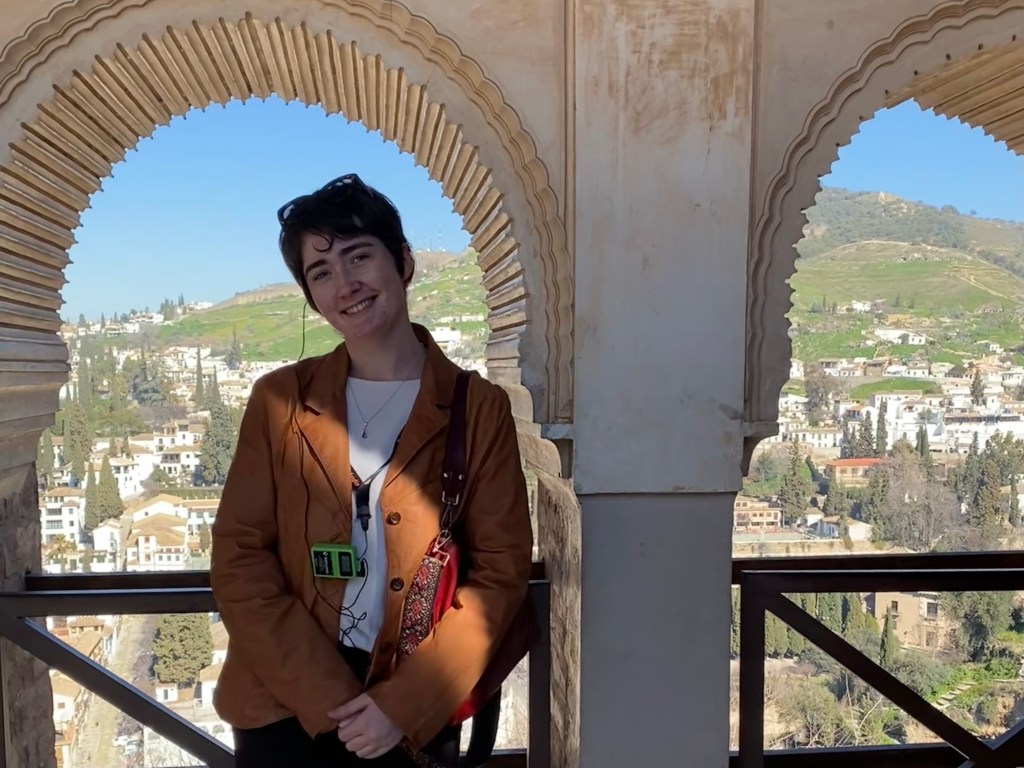
Most people see a year abroad as an opportunity to travel, learn another language or improve your language skills, to experience another culture, and to make connections abroad. One of the main reasons that I chose to study Spanish as a part of my degree was because I saw a year abroad as a valuable part of the university experience that I didn’t want to miss out on, so, a degree with a mandatory year abroad was attractive to me. When else do you have the chance to move to another country with a guaranteed support system in place, funding, a community of people like you who all share a passion for language and travel? Durham’s languages department, Modern Languages and Cultures (MLAC), allows students to do practically whatever they want on their year abroad, provided that they are in a country that speaks the target language. This provides an enormous scope for what you can do with the year.
As a first year, I found this prospect overwhelming. Both of my older sisters had studied on their year abroad, and I hadn’t considered that I could do anything else. Talking to second years about what their plans were, it seemed like the opportunities were endless; one boy was heading off to work as a tennis coach for the year in Spain, another girl was going to volunteer as a ranch hand somewhere in South America (she had actually lied on her application about having horse riding experience, and I do wonder how that went for her). After some consideration, I decided I wanted to work. As a failsafe I applied for a term studying in Las Palmas, which is where I spent the first 5 months of my year (I was worried I wouldn’t find someone to hire me for the whole year). My last 5 months I spent in Granada, working as an intern in a company which organised Erasmus+ trips for secondary schools.
Both of my older sisters had studied on their year abroad, and I hadn’t considered that I could do anything else
At the time, all of my work experience was in customer service; I had worked as a front-of-shop assistant in a pharmacy and as a catering assistant. I hadn’t really considered either of these as something I could continue to do in the future, whereas in Granada I was hoping to get some office experience. Not only was the Granada job not very office-centred, it was less structured, more varied, and overall a complete departure from what I was used to. If I’m completely honest, which I feel is necessary before I march on with my career advice in this article, I didn’t enjoy this role. It had been advertised as more of an office assistant role, and was closer to a tour guide / translator for secondary school groups visiting Granada. This is the risk with finding work as a student on your year abroad. It will likely be unpaid and will probably not be what it says on the tin. But, as you’re ideally supported by an Erasmus grant or Turing Scheme funding, the year abroad the only time in your life where you can take an unpaid role like this at face value and use it to evaluate your career preferences.
Even though the tour guiding took me completely outside of my comfort zone, I was able to develop my interpersonal and conflict resolution skills, evaluate what it was about the tour guiding that I didn’t like, and reflect on what sort of workplace I’d prefer. Every week there would be a new school group from a new country, with a new dynamic that I had to adapt to. I found this emotionally stressful, and I learned that something I’d like in a future career is a core team of people that I can build relationships with. I also found it frustrating how the plans of the group would suddenly change, affecting my day. This helped me evaluate that I want a structured work week, a regular-ol’ 9 to 5. In the weeks when there were no tour groups I would assist in the office with general administrative tasks, and I found that I much preferred this. Even though it sounds slightly mad to admit that I preferred looking at a screen in an office to strolling around the streets of Granada interacting with the public, it’s the truth, and I’m so glad I learned that about myself before heading into job application season.
I learned that something I’d like in a future career is a core team of people that I can build relationships with
Working during my year abroad also enabled me to use my free time to develop career skills in other ways. Unused to the amount of free time I had after work (I had no readings to do, no essays to write!) I used Durham’s Career and Enterprise service for the first time, which I cannot recommend enough. Through multiple meetings I was able to perfect my CV, practice job interviews, and discuss career options which I hadn’t considered. Their advice, and the new work experience I was gaining, helped me to secure a summer job in Dublin as the Duty Manager of a language summer school. I don’t think I would have had the confidence or experience to secure this role without my time in Spain.
There are many practical reasons for gaining work experience on a year abroad before your final year; you have more to put on your CV, more to talk about in interviews, experience of the application process, a professional level of a foreign language in some cases. But, it also gives you the time and experience to reflect on what you want in a career post-graduation, preparing you for the job application frenzy you’re about to enter in your last year. So, to any MLAC students reading this, or any other students considering a placement year abroad, I cannot recommend the work abroad experience enough.
Image: Saoirse McDonagh




Leave a Reply