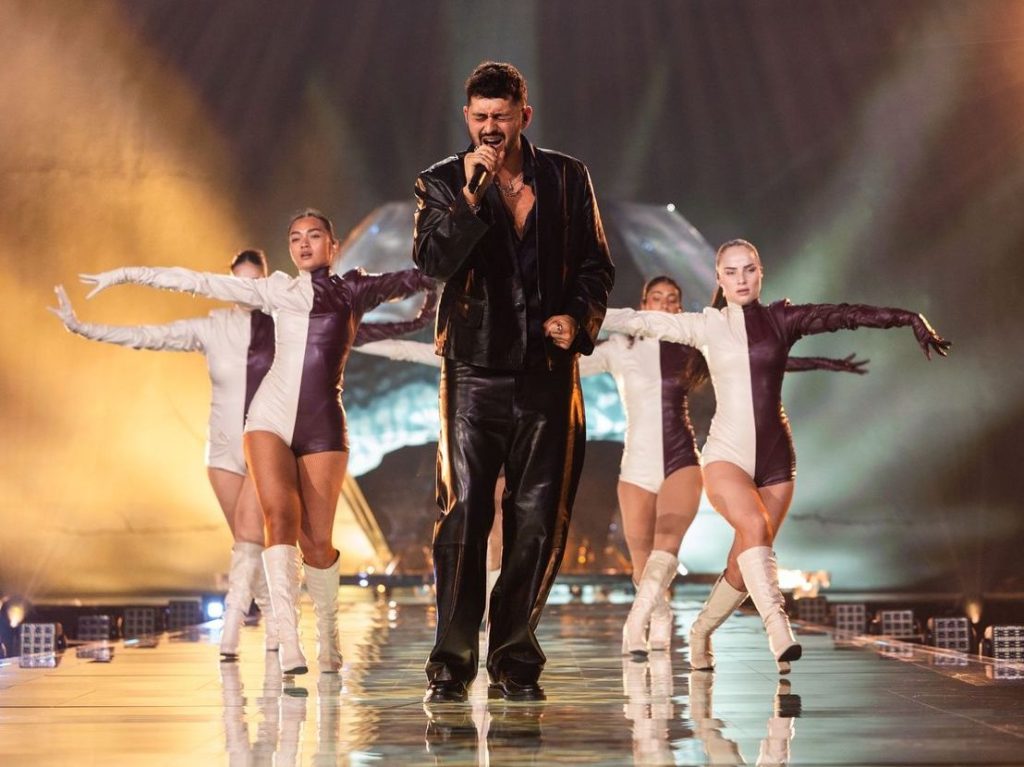
For the third year in a row, the Eurovision Song Content has been shrouded in a cloud of controversy centring on Israel’s continued participation. This year, it culminated in 5 countries’ broadcasting agencies boycotting the competition. Iceland, Ireland, the Netherlands, Slovenia and Spain all withdrew their participation, citing the ongoing genocide in Gaza and broader human rights violations, including the targeted killing of journalists. Further backlash was fuelled by the involvement of the Israeli Government in funding an advertisement campaign encouraging overseas audiences to vote the maximum number of 20 times for the Israeli contestants. Against the backdrop of Russia’s exclusion following its invasion of Ukraine back in 2022, Israel’s continued participation and state involvement in voter manipulation seems to be in stark contradiction to rules against the event’s politicisation. Whilst some might lament whether Eurovision will be able to remain neutral, I’m going to spoil it for you now: it never was.
Whist some might lament whether Eurovision will be able to remain neutral, I’m going to spoil it for you now: it never was
Going back to the very beginning, the contest was born out of the Second World War which in its aftermath, saw the establishment of the European Broadcasting Union (EBU). The EBU was created to facilitate the construction of a regional television broadcast network and strengthen technical cooperation across Europe and several MENA countries. (The inclusion of the latter is itself rooted in politics as these mainly consisted of former colonies of the UK and France who were integrated due to imperial interests). Additionally, aside from content sharing and technical collaboration, there was a clear interest in promoting regional unity following the war, something particularly imperative to strengthen Cold War alliances. It is for this reason that it is important to understand the Song Contest as having been established as platform to display political and cultural unity. For example, following the fall of the Iron Curtain, several Eastern European countries would join the EBU. It is arguably from here on that Eurovision’s political significance developed from a show of Western European unity and cultural capital to an event reinforcing a “neutrality” which ultimately centres around adhering to the values of social liberalism and multilateralism, the underscoring principles of modern European identity and foreign policy.
Individual broadcasters also have a long history of boycotting the competition, making this year’s protests not all that unfamiliar when we look back in time. The first political boycott was by Austria in 1969, who refused to participate in protest of Francisco Franco’s dictatorship in Spain, the hosting country. Israel is also not unfamiliar with boycotts against it: when Israel was first granted participation in 1973, there was a near complete boycott by all Arab nations involved. Turkey was also pressured by neighbouring Arab states to withdraw when in 1979, the contest was held in Jerusalem. After all, just 9 days before the competition the UN Resolution 448 passed, determining that Israel’s settlements in occupied Palestine (including East Jerusalem) were in breach of international law.
With that said, in the words of its Director-general Noel Curran, the EBU maintains that “it is the broadcaster that participates, not the country”. However, it would be doe-eyed naivety to not acknowledge the long history of the show’s instrumentalisation as a soft power tool for nations. After all, when a contestant does well it ultimately serves the interests of the nations they represent, not just through tourism, but also through the power that cultural diplomacy can have on global public opinion. It therefore feels shallow when Curran, in response to the criticism around letting Israel participate, explains that “Russia was excluded because the broadcaster was so linked to the state that it became part of the apparatus around the invasion of Ukraine”. Such an explanation falls short of acknowledging the range of ways which the Contest has been mobilised to serve national interests.
It would be doe-eyed naivety to not acknowledge the long history of the show’s instrumentalization as a soft power tool for nations
Estonia, for example, used the competition to rebrand its image as a post-Soviet country to be more aligned with wider pan European culture, arguably supporting its campaign to become an EU member state. Israel’s case also sees the Contest take on strategic significance for the normalisation of EU-Israel relations and as a tool to paint itself as a progressive and democratic society. However, in their case, the competitions instrumentalization had gotten referred to as an act of art-washing (or Eurovision-washing to be even more specific), that is, the act of using creative projects and art to cover up unethical behaviour and forge a socially accepted outward guise A clear example was in 2019 when Israel hosted the competition. During the introduction of one of the contestants, a video taken in the occupied Golan Heights was used which has been criticised as an attempt to brand these territories as ‘Israel.’ The issue now is that considering the wide documentation of violence against Palestinians and the ever-growing consensus of Genocide, the attempts to distract from the country’s behaviours are not as effective. Not to mention the fresh memory of Russia’s exclusion making it easy to point out an obvious double standard.
As a result, this is likely the first time that the politics of Eurovision have been so clearly laid out on the table in front of younger generations (and not the somewhat humorous kind that we’ve come to accept, such as Greece and Cyprus always giving each other 12 points). After all, the years following Conchita Wurst’s win in 2014 really propelled the positive image of Eurovision as a queer-friendly celebration of diversity. However, a quick search online will reveal that the Eurovision Song Contest is no stranger to messy politics and as long as the contestants are being introduced by country rather than name, it doesn’t matter if the EBU claims that “it is the broadcaster that participates”. By competing under their country’s flag, the contestants will always become an extension of their nation. Therefore, should Eurovision wish to once again become a camp celebration of cultural diversity and constructive patriotism, the EBU can start by recognising that it was never the politically neutral stage it claims to be.
Image: © EBU / CORINNE CUMMING



Leave a Reply