Few international relationships better illustrate the contradictions of modern American power than that between the United States and Canada. As we approach the start of the latter half of Trump’s second term as president, we can reflect upon the rising tensions between the US and Canada over this last month, and evaluate where we see these conflicts heading over the next 2 years. Historically, the US and Canada have had a close political relationship, spurred by their geographical closeness and cultural similarities, with deeply integrated manufacturing, energy and supply infrastructure that enable cross-border trade borne from shared economic and security interests. However, with Trump’s ‘51st state’ threats against the nation, how can Carney navigate this pressurised political landscape? Disputes over trade, tariffs and sovereignty as outlined by political researcher Ambrose have revealed a fundamental contradiction in modern international politics, highlighting that the use of hard power can undermine the soft power upon which lasting international cooperation depends.
How can Carney navigate this pressurised political landscape?
Hard power refers to the ability of a state to influence others through coercion, primarily using military force and economic pressure. The US possesses considerable economic leverage over Canada, and the imposed tariffs are being used to pressure the Canadian government into making concessions, emphasising the vulnerability of economic interdependence. Furthermore, Trump’s rhetoric reported by the Guardian about Canada one day being the ‘51st American State’, implying a potential military coercion, further undermines the collaborative benefits of this longstanding relationship, exposing the asymmetry of power between the two parties. Carney recently announced military contingency plans for the improbable US invasion following the tensions of the conflict, straining the NORAD partnership explored by critic Moran, and further aggravating the frictions between the states.
The consequences of this continued conflict extend beyond economic strain, permeating into the soft power of each state. Soft power describes a state’s ability to influence others through shared values and international legitimacy, and is directly linked to a state’s power to conduct diplomatic relations. For decades, the United States has benefited from its reputation as a reliable ally, while its Canadian partnership has reinforced continental security through institutions such as NATO. However, Canada’s response to the economic and military coercion highlights the danger of the deterioration of a nation’s reputation, as Canada’s new matching tariffs on US imports announced on August 25th demonstrates the heightened tensions and fragilities of both parties, provoking quick resistance against potential resolution or intervention.
For decades, the United States has benefitted from its reputation as a reliable ally
The crisis also places additional pressure onto Canadian leadership to quickly develop domestic infrastructure to prevent further economic exploitation. Prime Minister Mark Carney’s recent support for a proposed diversified trading portfolio reflects this widening ambition, and further states along the pacific coast have taken to protecting themselves from America’s economic instabilities.
With these increased international tensions, three broad outcomes remain possible for the conclusion of this conflict: negotiated de-escalation, prolonged stalemated economics, or deeper diplomatic fragmentation. The direction of the relationship depends substantially on the willingness of both governments to compromise, the economic consequences of continued tariffs and the diversification of Canadian international partnerships.
Ultimately, the US-Canada crisis illustrates the limits of coercive power, and the heightening international tensions between these two states exposes the fragility of the international system. The coming two years will further test the bilateral relationship, straining and drawing attention to the interaction between competing economic and political powers.
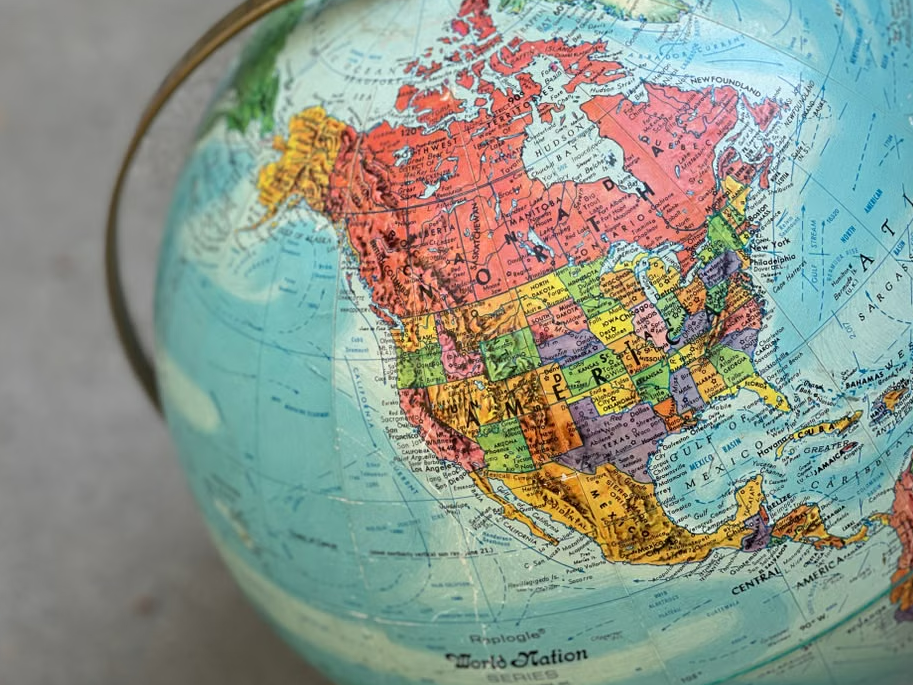
Image: Keverne Denahan via Pexels
Ambrose, Tom, et al. “Trump Doubles Down on Canada Trade War as Talks Remain Stalled – as It Happened.” The Guardian, The Guardian, 3 Sept. 2026, www.theguardian.com/us-news/live/2026/sep/02/us-politics-latest-news-updates-donald-trump-iran. Accessed 18 Oct. 2026.
Moran, Tracy. “Canada War-Gamed a U.S. Invasion. A Former NORAD Commander Explains Why.” Nationalpost, National Post, 17 Oct. 2026, nationalpost.com/news/canada-war-gamed-a-u-s-invasion-a-former-norad-commander-explains-why. Accessed 18 Oct. 2026.




Leave a Reply