A few months ago, I was taking a run with someone through the forests and fields which lie just outside Durham. At one point, we came to a clearing providing a pretty jaw-dropping view over the countryside, with lush green hills rolling and stretching on for as far as we could see. We paused to catch our breath and marvel at the vista for a while. I’d never associated the word ‘beautiful’ with the post-industrial Northeast of England before coming here, but the whole area has this feeling of wilderness to it – not the pristine nature-preserve kind of ‘wilderness’ I was familiar with but the real thing, where the untrammelled flora of the landscape feels in sync with the random, almost Wild-West pattern of development which accompanies it. It’s an environment I’ve grown attached to in the last few years.
As we were looking at all this, our conversation somehow moved on to A.I. Both of us being humanities students staring down the barrel of our final years at Uni as well as a labour market whose very existence is coming into question, the advent of ChatGPT had the potential to be a raw subject. I was surprised, then, at the more-or-less unbothered reaction which met my own expression of wariness towards these developments. A.I., they said, has been a godsend in their life, providing helpful tips during their essay-writing process and even helping them come up with recipes for dinner each night. Were it to be taken away, they jokingly suggested, they might be uncertain in the completion of tasks they had once carried out unaided.
I was surprised at the more-or-less unbothered reaction which met my own expression of wariness
I didn’t really react to this at the time, and we soon resumed jogging through the woods. Yet ever since, that comment has been sitting uneasily in my mind. I’ve had a few similar experiences this year – of talking to someone who reveals they’ve been using a chatbot not only for work but for routine, everyday tasks – and have had the same unsettled reaction. I can’t entirely explain why. I’m certainly not implying that the act of relying on A.I. in this way renders anyone morally suspect. All of us need support more than we readily acknowledge; rarely do we get as much as we need. Yet I’d be lying if I didn’t confess that my gut feeling upon hearing this stuff is a kind of repulsion: not from the person themselves, but from the very idea of outsourcing not only your work but yourself (embodied as our selves as in the quotidian actions, decisions and annoyances which make up 90% of our waking lives) to a machine.
Like everybody, I remember when these things first began gaining steam in late 2022. I actually thought they were pretty funny back then – toys which would spit out blocks of text in response to anything you could throw at them, sometimes even appearing semi-coherent or insightful. By far the most exciting part of using them, though, was precisely when they didn’t measure up to those standards. When the mask of reasoning and coherence slipped, revealing an entirely alien world of competing numerical probabilities desperately seeking an approximation of its training data. The hallucination, in that sense, is the only original form of expression AI is capable of producing. My attraction to using chatbots has been pretty much inversely proportional to the success of attempts to flatten out these inconsistencies and ‘improve’ them, and by now I don’t engage with them at all.
Amidst the barrage of advertising material aimed at getting us to use A.I. and justify the obscene speculation propping up the entire industry, a theme which keeps recurring is that of friction. A.I., it is promised, will make your life ‘frictionless’, ironing out such frustrations as having to write essays on schedule, come up with your own prose or relate to your children. Never again will you experience the blank page scaries , with A.I. prompts and structuring suggestions to erase any moment of doubt over what you’re writing, why you’re writing it or whether you really have anything to say anyway. And why not? What purpose does the paralysis of indecision serve, other than often simply to forestall our taking action at all? Better to surrender ourselves to the warm embrace of a Learning Language Model (LLM) which, whatever else you might say about it, could never be accused of letting uncertainty get in the way of a finished product.
What are we producing, though? In the chatbot vision of the world the products of our labour are no more than that – products, with no value whatsoever attached to their creation. A piece of writing that ChatGPT spat out in a few seconds is of equal worth to one a human being laboured over for several hours, merely because they can both be called ‘pieces’; because they can both be said to exist in the world, irrespective of what (or who) they contain. When you use a chatbot as a substitute in whole or in part for mental work, you are unavoidably acceding to this vision. At least for that particular artefact of labour, you have willingly effaced yourself from the process and, as a consequence, from the final product. It bears no more relation to you than it does to the millions of living and dead writers from whom its contents have been scraped.
Writing that ChatGPT spat out in seconds is of equal worth to one a human being laboured over
That feeling of dread that creeps into all of us when faced by a blank page is actually fairly well-founded. It is the knowledge that, as opposed to the various states of autopilot we exist in for most of the day, our entire selves are now demanded. The fear inspired stems directly from the set of usually suppressed questions that the experience surfaces – what do I want to say, and do I know how to say it? What piece of myself is appropriate to set down in writing? Does that piece even exist? There is nobody in the world to whom these questions would not affect discomfort, and insofar as an LLM can alleviate that discomfort it only makes sense that it would be put to that use. But when these questions (‘frictional’ as they may be) go unasked, they also go unanswered. We do not find out what we want to say, or how to say it. If there were parts of ourselves yet unknown, they remain so. We discover nothing.
Now, obviously all this is very crude Marxism indeed (alienation of labour, commodity fetishism etc.) and I wouldn’t pretend to be well-read enough for a rigorous application of the theory. With that said, I think the fact that the vaunted ‘knowledge economy’ of the 1990s may finally be liquidated in the same perfunctory fashion as its manufacturing predecessor at least bears consideration in this vein. If the promises of that earlier transition – the freeing of our children from the punishing manual toil in favour of their own creative development as people – were high, then its subsequent denouement may have an even higher cost. The internet and social media more than ever before have rendered thought an act of productive labour. Capital was ploughed into innumerable enterprises relying on a faithful labouring class for the production of their algorithms and content feeds, logging on and posting, day in, day out. What would it mean to be alienated from our labour in this context?
What would it mean to be alienated from our thoughts?
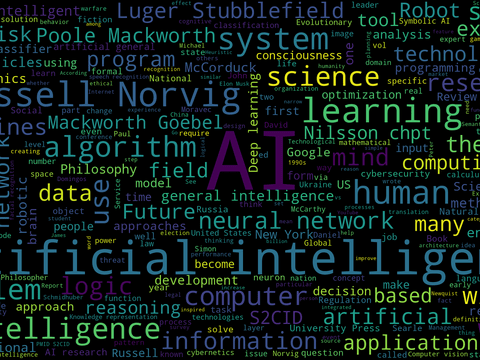
Image: Madhav-Malhotra-003 via Wikimedia Commons


 HEX
HEX 
Leave a comment