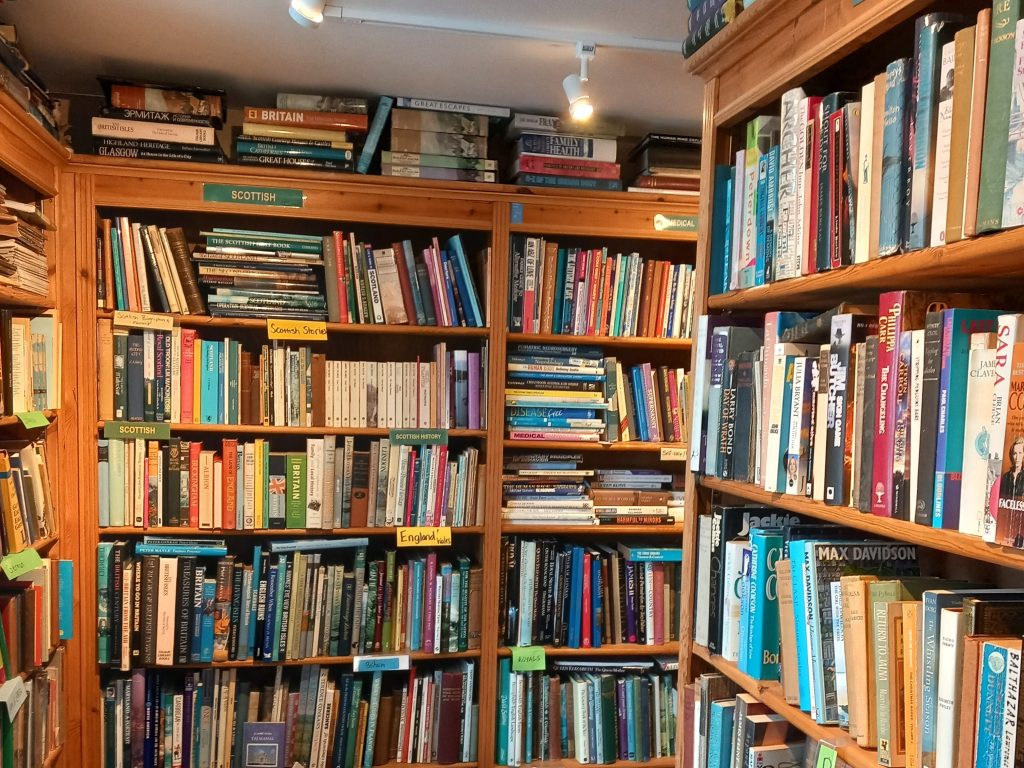
As any first year English literature student quickly realizes, the workload for the degree is heavy. Depending on the modules you take, you will likely be expected to read multiple novels, plays and poems each week, and, furthermore, produce a coherent analysis of these texts.
I am not sharing this information to complain, but instead to demonstrate why a first year casual bookworm like myself had to change her approach to literature entirely, and the effect this has had on my recreational reading since.
As my course demanded much more reading than I was used to, I found it difficult to find the motivation to read casually during the academic year. During my first year summer, I strived to reduce my second year workload by making my way through my upcoming reading lists, meaning this avoidance of recreational reading was maintained until this summer, before I headed off on my year abroad.
As I had no reading lists to focus on, I regret to admit that July was the first time since starting university that I began to read for leisure again. But, what I thought would feel like slipping into old habits, became a frustrating reminder that I have changed since studying Literature at a university level, meaning I can’t digest books in the same way.
My eighteen-year-old decision to study English literature and Spanish was not based on a well-formulated plan for my future, but instead my consistent love of reading and steadfast dedication to my school’s book club. I was planning on pursuing European Studies until someone pointed out to me I would probably find it extremely boring and I should spend my degree focusing on something I found interesting (they weren’t wrong).
I have changed since studying Literature at university, meaning I can’t digest books in the same way
I hadn’t felt very academically passionate about books – English was my favourite subject in school, but it was a casual sort of love. I wasn’t very committed to English Literature and didn’t think very deeply about the books I read apart from simply enjoying the experience of reading. It was by no means my best subject either, I was a steady B-student (or H2, in Irish Leaving Cert terms). My favourite book was Where the Crawdads Sing, not for any particularly insightful reason, but because I really enjoyed the imagery and was hooked by the mystery.
Back then, when I picked up a book I could slip away into the author’s world – the events of the novel would play out like a movie in my head. I remember being delighted by the movie adaptation of Where the Crawdads Sing, it was like they had taken the visuals directly from my brain. Through reading, I would forget where I was and become entirely immersed. Thus, the way Literature is studied at university caught me off guard.
I had to get used to reading fast while also staying engaged; to focusing on language, noticing small details, and trying to find something I could form an opinion on and present in a tutorial. I learned a lot more about the wider context surrounding different eras of literature, something I had no previous experience with. Although at first I felt extremely out of my depth among post-A level students who had been studying English far more thoroughly than I had (in the Leaving Cert, students typically study seven subjects, not three), I eventually caught up and started to enjoy this broader, context-based approach to Literature.
Now, some of the books I read for my course were added to my favourites list, but for completely different reasons. I have learned to really love Mrs Dalloway for the small details that link to a wider modernist context, although I struggled through it upon first read. Understanding why a certain novel was revolutionary for its time has gifted me a new perspective through which to appreciate books.
Fast-forward two years, to the start of this summer. What initially spurred this return to reading was asking my best friend what their current favourite book was, and being dismayed that I hadn’t read it (and we therefore couldn’t talk about it!). So, I bought a copy of Kazuo Ishiguro’s Never Let Me Go and started to read. This is the book which showed me that my brain works differently now. I can’t simply let the words disappear and watch the story like a movie in my head, especially not with such a fantastically crafted book.
Although this may sound ridiculous to admit, I was shocked at how many thoughts I was having about a word the author used, something subtly implied here or there, small details that I wondered would appear later and felt the need to note. I couldn’t let the book sweep me away, my immersion kept being broken by my thoughts and opinions (outrageous, I know!). Put simply, I was surprised by how much I had to say about the book.
My brain works differently now…I can’t simply let the words disappear
In retrospect, this makes complete sense. It’s obvious that after two years of trying to pick apart every book, play, or poem I read, I wouldn’t be able to discard this new approach. My degree has trained me well. While I am still slightly grieving my ability to flick through books enthusiastically and casually, I am learning to find a different sort of enjoyment and relaxation from my current reading reality.
Nowadays you will find me reading for leisure with a pen in hand (I’m aware of how pretentious this is), and keeping track of my thoughts in the margins of the page. Sometimes I flash back to English classes I was in when I was 15, and my discomfort at putting pen to novel page when the teacher instructed us to underline a key sentence, but that discomfort has passed since studying English Literature. I am now able to share the experience of reading with my long-distance friends, posting around an annotated copy of a well-loved book. Or passing it from one person to another when we get the chance to see each other. It feels much more special than simply recommending a book to a loved one. This is something I would have found unthinkable before university, as I didn’t have the courage to put anything down in the margins of a book in permanent ink.
Studying English literature did take my old joy out of reading but it replaced it with a new one. It’s nice to know that my education is working, too! However, a warning I will leave any budding Literature critics with, is that I will never be able to read a poorly-written beach read again. No more switching my brain off and reading a trashy romance novel – if it has a badly constructed simile, I will have something to say about it.
Image: Alice Martin


 HEX
HEX 
Leave a comment