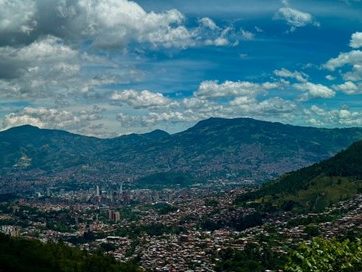
The combination of a troubled history and an unfair portrayal through the media has rendered Medellín a seemingly daunting location for travellers. Though this paradigm has drastically shifted in recent years, these perspectives still shape the willingness to travel to Medellín. However, using the experience of my time in Medellín, I aim to change perceptions of travelling to this city of eternal spring.
Arriving into the José María Córdova Airport, not technically in Medellín but the city of Rionegro, provides the traveller a glimpse into the region of Antioquia (of which Medellín is the capital). Thousands of mountain-tops that rise to embrace the clouds, cut by large murky rivers imposing valleys in their path, filled with faint houses and quaint towns, farms and their lands, all in between vast oceans of pine, dandelions, guadua, palms, heliconias. Even if the traveller ends up staying solely in Medellín, it is enough to elucidate the traveller on the diversity and complexity of Colombia’s landscapes.
Afterwards, the journey to Medellín from the airport presents another stunning look into the landscape. Since Medellín is located on a lower valley (~1500 m above sea level), and the airport sits more or less on the San Nicolás Valley (~2000 m), the road which connects both allows the traveller to fully view Medellín from above before descending into it. It provides a window into the expansiveness of the Aburrá Valley in which Medellín sits, from scrambled neighbourhoods on mountain slopes, to tall buildings within the lowest points of the valley, and the coexistence of greenery and urban sprawl which characterizes the city.
[Medellín] is enough to elucidate the traveller on the diversity and complexity of Colombia’s landscapes
Once in Medellín, the first thing a traveller notices is its climatic conditions. While I write this, it is exactly 20°C outside, combined with a hint of humidity (enough to feel it but never overwhelming), and a balance between sun, clouds and rain. This gives the city its ‘eternal spring’ trait; never too hot nor cold, flowers in blossom, trees and plants in perfect health year-round, and the constant orchestra of birds (contrasted with the noise of cars, construction, etc.) present a very pleasant, and seemingly discrete, urban atmosphere. In addition, this contrast is reflected in the connected activities you can partake in Medellín, from exploring the historical centre and bustling street markets, to the less than hour-long trip to large protected parks such as Arvi Park.
The key to this connectivity? An integrated and well-managed multi-faceted public transportation system which rivals any large city in Europe (and surpasses in cleanliness). From the metro, to the tram, cable cars and buses, a traveller can access all areas of the Aburrá Valley and beyond. During my travels, a single bus and metro trip was enough to get from my local residence in Envigado (a neighbouring city to Medellín) to the historical centre, only costing around 2 pounds. Furthermore, public transport systems extend beyond the valley, allowing travellers to journey into towns such as El Retiro, Jericó and Santa Fe de Antioquia, cities like Rionegro, and the mountains which loom over Medellín like giants. These offer a range of other unique opportunities, such as hiking, climbing, horse riding or simply sight-seeing, exploring the ruins of the colonial or/and prehispanic past hidden in the immensity of the mountains.
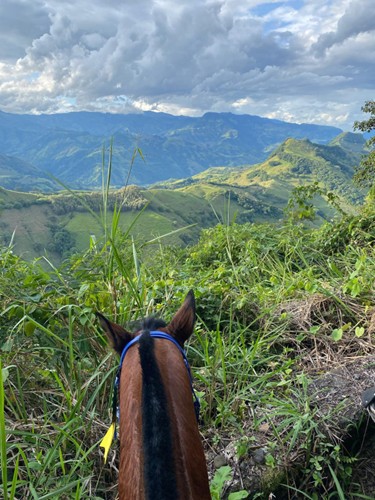
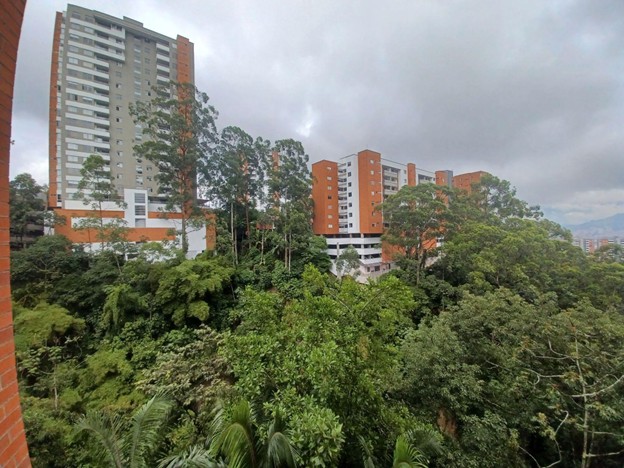
However, beyond the plethora of areas to go and things to do, simply walking through Medellín’s diverse streetscapes, noting interesting reflections of the challenges which affect all countries worldwide (i.e. growing modernism), is a rewarding experience. Although not all areas of Medellín are safe for these kinds of activities, like anywhere else in the world, travellers should keep a cautious vigilance of their surroundings and avoid areas, usually distinguishable, which may seem unsafe.
Nevertheless, inside Medellín, one of the most popular destinations is to visit the general areas around La Candelaria, Botero Plaza, and the Metropolitan Cathedral, which includes impressive marketplace areas. Here, within contrasting street shops, malls and historical buildings overrun by enthusiastic sellers, everything sold is negotiable, and those skilled in bartering will often find everything they need at low prices. Yet, beyond this seemingly simple assertion, lies a reflection on the chaotic and charming organization of this city of eternal spring. In between the historic and the modern, the concrete and the forest, and the apartment building and farmstead, lies a city in which seemingly different landscapes converge into one.
Despite making this journey frequently, the experience of travelling to Medellín, be it for the first time, tenth, or hundredth, remains consistently sensational. The first approach into the Aburrá Valley from above, and the sight of Medellín as it enters into the horizon, provides the traveller a window into the diversity, complexity and beauty of Colombia. Perhaps the image of Medellín may not completely change overnight, but continued travel will help highlight the aspects explained above. It is the willingness to explore areas before judging them that will improve travel to many areas of the world generally.
Image: Nicolas Restrepo



 HEX
HEX 
Leave a comment