5 stars
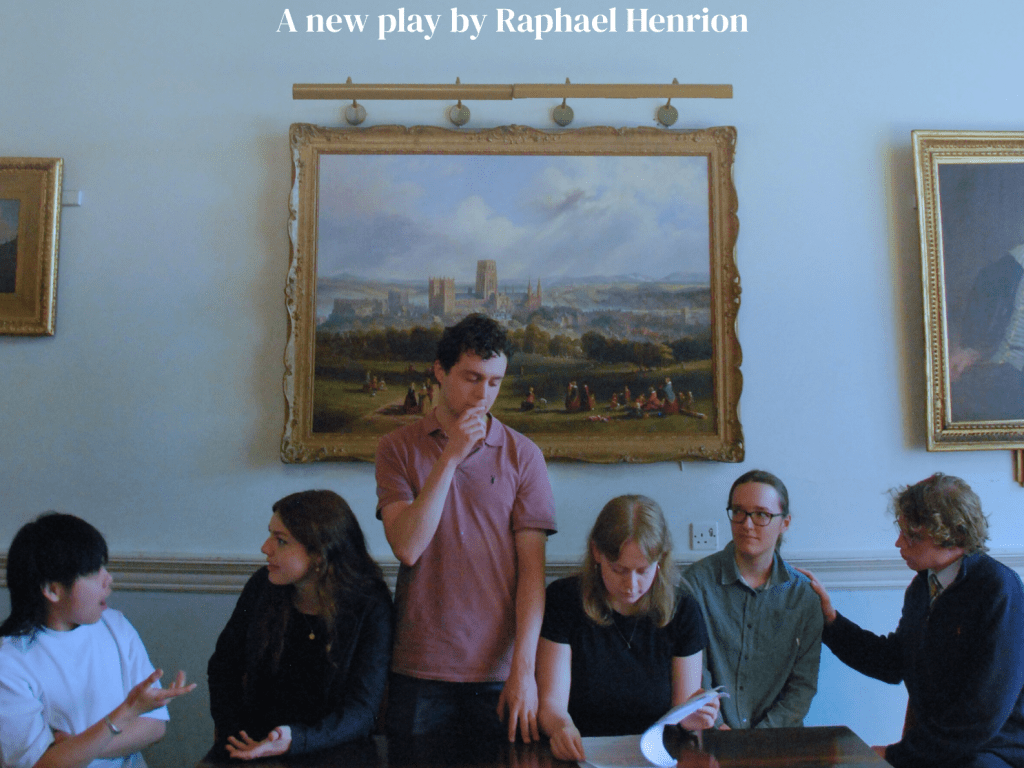
Walkabout’s student-written production of Room for Doubt was a phenomenally powerful and morally vigorous, character-driven piece concerning the tricky topic of a nurse (the fictional Emily Carter) mercifully (or perhaps not) killing her suffering patient.
In pure immersive theatre fashion, the moment I stepped into the building, the piece had begun. This beautiful blurring of the starting point of the play demonstrated the actors’ tremendous talents for improvisation and acting with conviction (and props to the directors, Robyn Bradbury and Raphael Henrion, for playing in on this as well).
…phenomenally powerful and morally vigorous…
We were given lanyards that indicated how much we wished to be interacted with directly throughout the show (red- no direct interaction, green – direct interaction) and pencils which we would use to tick off slips of paper confirming whether we thought the subject was guilty or not guilty over the course of the play, a really clever and further immersive element.
We were brought into the beautiful Vasey Room in St John’s College, a perfectly simple yet intimate room with a table scattered with evidence files, at which all audience members and cast members would sit. The dynamic of being either opposite or sitting next to the performers added to the feeling that you were really in on the dauntingly important and almost eerie task of reaching a conclusion for the case of Emily Carter. The piece was poignantly led by the refreshingly confident and convincing Orlin Todorov as Sasha. Todorov captured the whole audience from start to finish, acting as the voice of reason. I was hanging onto his every word, and had to remind myself I was not actually on jury duty. Like I’m sure many felt, I was fighting the urge not to chip in on the conversation.
Another highlight from the get-go was Grace Graham’s performance as Mable. Graham injected power and passion into the piece from the moment she sat down. Like much of the dialogue, her sharp sincerity was dappled with irony and comedic quips while keeping an impressively straight face. Mastering projection in such a small space rather than a larger stage must have been difficult, yet Graham did so flawlessly.
Her ‘lap dog’ Patrick (Matthew Lo) did excellently to play the messy, tardy, unopinionated juror, arriving later than the rest of the cast with an untucked shirt and an adorable pink Hello Kitty pen. I was captured by his characterisation and facial expressions throughout. To speak briefly about costume, each cast member wore an appropriately formal outfit that reflected the character in some way: messy, uptight, relaxed, nervous; I’m a sucker for a good, simple, subtextual costume and this was done well.
It seems as if I am saying all of the cast members stood out, which, for the sake of writing a concise review, is annoyingly true. Another real star for me was Noah Benson’s performance as Alex – the harsh ‘mummy’s boy’ of the group. Being opposite Benson at the table, I felt every piece of movement, expression and dialogue he engaged in directly, and it pinned me down in awe. With similar conviction to Graham, Benson’s arrogance, wit, and severity glued the play together; I was really both enamoured and irritated by his character, another case in which I had to remember the situation was fictitious. Benson’s line, “This isn’t theatre!!” in a heated argument with Graham’s character Mable really made me giggle.
It seems as if I am saying all of the cast members stood out, which, for the sake of writing a concise review, is annoyingly true
The character Sarah (played by Trevelyan College’s own Alysia Orbell), as the mediator, addressed the room with a subtle and moving power that contrasted the harshness of Mable and Alex well; her facial expressions and body language when not explicitly engaging in dialogue were phenomenal and enthralling.
I have left my personal favourite until last, Oli, the reserved yet passionate juror, played by Daisy Martin. I was both fortunate and unfortunate in being seated next to Martin, which meant I struggled to see her facial expressions as much as I would have liked, but it also meant I saw all of the nervous body language: fiddling, tapping her leg, rubbing her arm; I could feel the nervous energy emanate off her. Martin’s performance was the perfect slow crescendo into a final erupting passion over the case that moved everyone in the room, in which we all stared in silence in awe of her performance. She shone in every line she spoke, even from her quiet refusals or agreements at the start of the play. I find it is often easy to play the more reserved characters in theatre too quietly, or without much thought. Martin was the antithesis of this; like the others, I was transfixed by her commitment and immersion into the world of this jury table for 60 minutes.
While character-driven, the plot and the twists and turns of the moral content of the case were never boring and never felt ‘stop-starty.’ Maybe it’s just because I am a philosophy student, but I was truly engaged in the ethical qualms of the situation, and was genuinely given space to reflect and think, which to me is a really important part of naturalistic theatre. I did not feel forced to take part in the jury duty, but was so absorbed by the clever writing and soft, encouraging command of the actors’ dialogue and consistent improvisation. I have to absolutely 100% take my hat off to the incredible work of Raphael Henrion, who, in my opinion, has just set a new standard for student-written productions. The play is creative, original, and intimate, unbelievably naturalistic, challenging, moving, I could go on. This is partly due to Henrion’s genius and Bradbury’s assistance in enabling his vision, as well as the cast’s commitment and sincerity in their acting. An absolute must experience.
Image: Walkabout Productions



 HEX
HEX 
Leave a comment