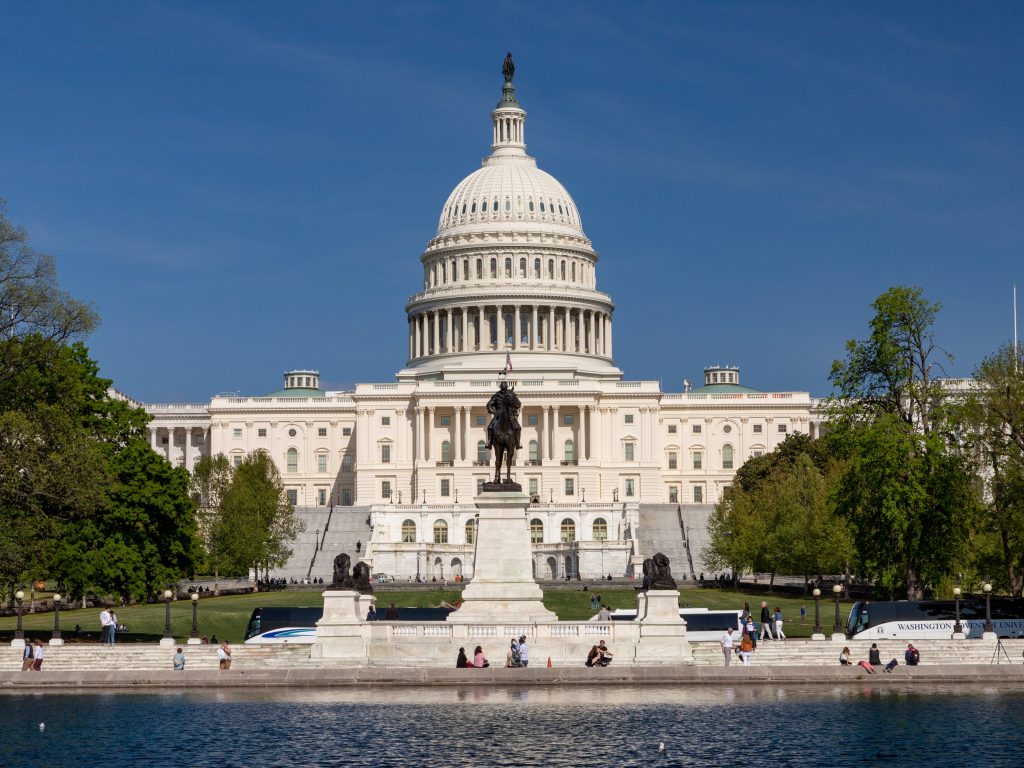
On Tuesday 4th February, Trevs welcomed Professor Scott Lucas of University College Dublin for the third Global Dynamics Lecture of this academic year. Titled ‘Twist or Bust’, Professor Lucas delved into an analysis of the outcome of the November 2024 US election, focusing on the national and international implications of a second Donald Trump presidency.
Sticking with the poker analogy, Professor Lucas opened his lecture with a rhetorical question: “What do you do if the person you’re playing poker with steals all the chips, shoots the dealer, and upends the table?”
We worked backwards from this point to the night of 5th November 2024, and the reasons for Trump’s defeat of Kamala Harris in what was polled as nothing other than a hair-splittingly close election. For Professor Lucas, popular misconceptions of the most significant valence issues led to such a decisive Trump victory. Namely, the assumption that reproductive rights would be the definitive voter issue when in actuality, economic and immigration policy proved to be of higher importance.
Professor Lucas went on to suggest that this resulted from political ferment in the U.S. that detracted voters’ attention from other pressing social issues towards more polarising policy standpoints that represented the dichotomy between the Republican and Democratic Parties. For antithesis, he referenced his current place of residence, Ireland, where social policies were the central valence issues in the most recent election. For instance, housing, healthcare, and child benefits, compared to a U.S. election dominated by hateful narratives based on mistruths, assassination attempts, and the central issue of the legitimacy of a convicted felon running for office.
Ultimately, the election “came down to what people felt.”
– Professor Scott Lucas
Moving back to the present, Professor Lucas outlined some of the odious acts undertaken by the Trump administration just three weeks into incumbency. One of the most harrowing seems to be the disintegration of the United States Agency for International Development, founded by President John F. Kennedy in 1961, responsible for global civilian aid, including tackling poverty and disease overseas. It is reported that USAID staff numbers could be culled from 10,000 worldwide to just 300, with thousands of workers expected to be put on administrative leave from Friday 7th February.
Further grave implications predict a dismantling of the Education Department, as well as institutionalised discrimination against all equality and diversity measures from a top-down federal level, which could have consequences as damaging as the denial of healthcare provisions for trans people nationwide. Beyond this, there are suggestions that the Justice Department and FBI will be purged of all members who stood in opposition to the attempted January 2021 coup of the Capital. Professor Lucas summarised by saying that the new administration is simply an administrative coup in plain sight, hidden beneath the veil of the election victory to confer legitimacy.
Omnipresent in all of the dissections of such measures was the figure of Elon Musk, referred to by Professor Lucas as an “unelected Vice-President.” Musk’s role as Trump’s cross-cutter and his task force of unelected financial auditors brought into question the extent to which such actions being undertaken by the Trump administration are compatible with core notions of democratic accountability. An ominous picture of a privatised bureaucracy with access to extensive amounts of classified information shrouds the new administration in uncertainty just weeks into its tenure.
The timing of this lecture was significant given the announcement of Trump’s tariffs towards Canada and Mexico, with China announced just days prior. For Professor Lucas, such policies simply epitomise Trump’s tendency to be a bullying and posturing politician. For instance, only 1% of fentanyl seized in the UC was intercepted across the northern US-Canadian border. For Professor Lucas, Trump’s actions in regard to the tariffs simply represent “white noise” tactics used as a conceit to rouse public support for such policies based on misrepresentation of facts.
The current political climate reads unfavourably, but in the long term, American democracy should remain as sacrosanct as it is often coveted by American citizens
Leaving ample time for questions, a consensus seemed to emerge in what was asked of Professor Lucas; in different forms, the consistent question seemed to be, to what extent can Trump subvert American democracy?
The response was that, in practice, it would be extremely difficult to subvert government as outlined in the Constitution. Professor Lucas is hopeful that collective civil values would present a red line that, if attempted to be crossed, would unite the nation against any movement towards authoritarian control in Washington, D.C. It is easy to forget that the Republicans control only a narrow majority in Congress, and checks and balances make any unsavoury Constitutional amendments near to impossible given that the Democrats still retain key states across the Eastern Seaboard and America’s West Coast. In essence, the current political climate reads unfavourably, but in the long term, American Democracy should remain as sacrosanct as it is often coveted by American citizens.
To try and cling to such positivity emanating from a lecture often not evocative of hope, at least in the short-to-medium term, Professor Lucas concluded with a quote from James Baldwin:
“I can’t be a pessimist because I am alive. To be a pessimist means that you have agreed that human life is an academic matter. So, I am forced to be an optimist. I am forced to believe that we can survive, whatever we must survive.”
Whether American democracy can survive a reemergent threat, seemingly intent on bettering what it failed to achieve four years ago by democratic means or otherwise, it will require such unrelenting optimism of those committed to civic virtues, democracy, equality, and representative government to steer the United States away from what appears to be an impending sinister course.
Image: Oren Rosen via Wikimedia Commons




 HEX
HEX 
Leave a comment