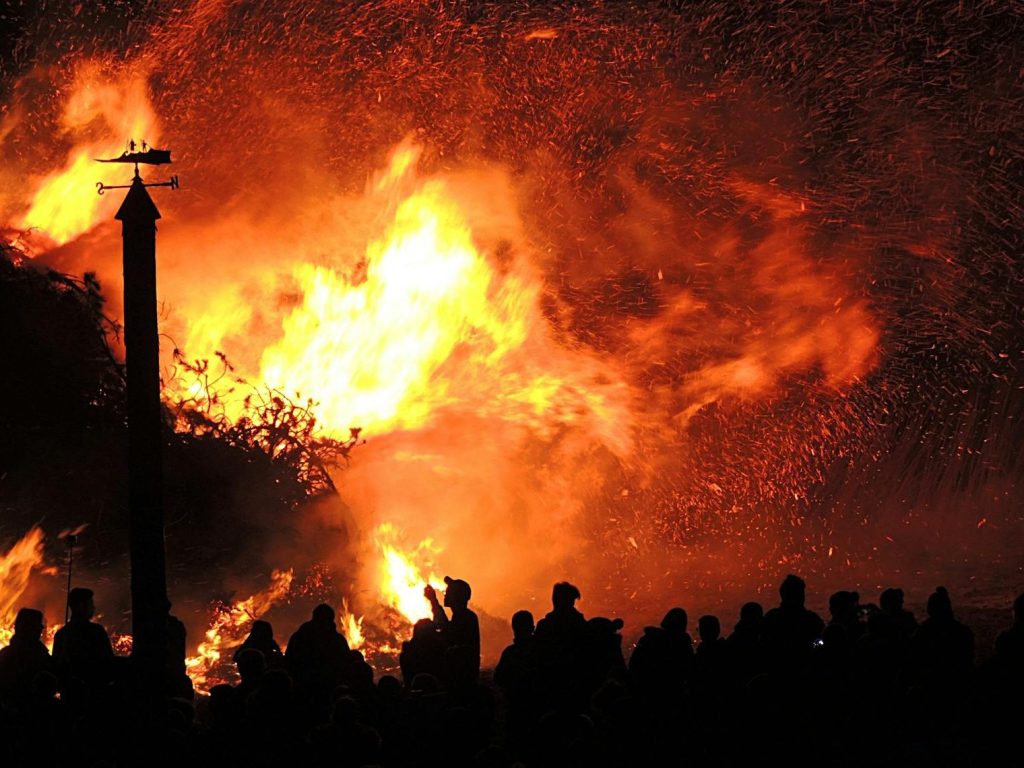
The apocalyptic images from Los Angeles have shocked the world as wildfires swept through the City of Angels, destroying everything in their path and leaving communities reeling in their wake. Hundreds of thousands of LA citizens were forced to evacuate from their homes and twenty-seven people are known to have died, with many still missing. The fires started on 7th January, a mere two days after the Golden Globes, when some of LA’s biggest stars gathered in their finery to kick off awards season. Drought-like conditions due to a severe lack of rainfall and strong winds proved an ideal combination for the wildfires to start and take a hold. Palisades and Eaton saw the most destructive fires, with a combined 40,000 acres being burnt. The sheer scale of these fires has resulted in the surrounding communities being completely levelled. Numerous celebrities have lost their homes, including Paris Hilton, Adam Brody and Leighton Meester, and Miles Teller, in addition to obviously the tens of thousands of other LA citizens, not to mention schools and businesses. Celebrities losing their homes is no more (or less) tragic than for anyone else, but the location of this natural disaster means it is nearly impossible to look away this time.
When witnessing other natural disasters brought about by the climate crisis, such as the hurricanes which wreaked havoc on America’s south-east coast or the devastating floods in Valencia in the east of Spain, we tend to feel so helpless that we look to celebrities’ social media accounts hoping that rapid content consumption will allow us to escape from this increasingly present reality. But this time, it is harder to ignore what is going on as the very celebrities we look to are instead sharing the horrific images of their eviscerated houses and communities. The normally glamorous way of life in Hollywood has been paused, resulting in the Academy Award nominations being postponed as well as several film premieres. The usual distraction of pop culture has now too been engulfed and affected by the climate crisis.
Celebrities losing their homes is no more (or less) tragic than for anyone else, but the location of this natural disaster means it is nearly impossible to look away this time.
The news has already moved on now the fires are partially contained and the most dramatic part is over, but for the Angelenos, this is only the beginning of an incredibly long process of having to start from scratch and trying to rebuild their lives and their communities. There is no quick fix for a situation like this. Similarly, in times of such chaos, people look to find someone to blame as a way of anchoring themselves when faced with such an overwhelming and faceless enemy. Los Angeles Mayor Karen Bass has been widely criticised for taking an official trip to Ghana despite forecasts indicating wildfires were imminent. Additionally, she cut $23 million from the Los Angeles Fire Department’s budget which resulted in reduced equipment purchases. President Trump has criticised Bass and also California Governor Gavin Newsome for refusing to sign a ‘water restoration document’ which has subsequently been revealed to not exist. This response of political finger pointing only serves to waste time. The size and force of these fires meant widespread destruction was unavoidable and I would say is only an insight into what is yet to come as the effects of climate change manifest themselves.
As 2025 heralds a second Trump presidency, likely to be full of yet more misinformation and outright lies, the climate crisis will undoubtably not be high up on the White House’s list of priorities for the next four years. Former UN climate chief Christina Figueres believes Trump’s re-election is a ‘major blow to global climate action’, evidenced by Trump’s seemingly unwavering desire to acquire Greenland due to its copious amounts of untapped oil and rare earth oxides. 2025 also began with the news that 2024 was the first year to pass the monumental 1.5°c threshold above pre-industrial temperatures.
It is clear that the Los Angeles wildfires will surely not be the last natural disaster brought about by the effects of climate change this year.
In the midst of all this devastation, the images of communities bonding together and helping those who lost everything are heartwarming and optimistic in a humanitarian sense. However, these are a response to the disasters, and I think clearly shows how helpless ordinary people feel in the face of such a crisis as they only feel capable of responding to it rather than tackling the gargantuan task of prevention. Indeed, a study carried out by King’s College London in 2021 showed that 15% of Gen Zers, the highest percentage of any age range, believed there was no point in changing their behaviour to tackle climate change because it won’t make any difference. That said, progress is quietly being made and there are positive stories when it comes to the fight against climate change. The UK closed its last coal-fired power plant last September, and the rapid global expansion of renewable energy sources means we are on track to add over 5,500 gigawatts of renewable energy by 2030.
In conclusion, the effects of the climate crisis are undeniably visible, and I believe the LA wildfires set the tone for a year with more communities being lost when faced with the full force of nature. Politicians passing the blame around instead of taking decisive action to enforce preventative measures and supply appropriate relief aid will be a common sight in 2025, especially given the political situation in the States where expert advice will fall on deaf ears. It is not for the ordinary person to save the planet, although we all can and should do our bit, but for governments to make decisions that actually serve to reduce carbon emissions on a large scale. The only glimmer of optimism to be found in the horrific aftermath of the LA fires is to hope this may be the wake-up call needed.
Image: Pixabay via Pexels



 HEX
HEX 
Leave a comment