
2024 was a big year for me with a record 90 books read. Whilst most of these were mandatory reading for an English Literature degree, not necessarily what I’d pick up myself, I still had an enriching and blossoming experience of literature this year.
I’d like to share the top five books that I read in 2024 that I still think about regularly, in the hopes that someone may have a similar reading experience to what I had. These books are delicate but powerful in prose, with the strongest ability to take you away from wherever you are reading, and place you in the midst of their worlds. They are truly beautiful novels, particularly fitting for me at a time when I’m moving towards change faster than ever.
Young Mungo (Douglas Stuart, 2022)
Young Mungo is Stuart’s sophomore novel after the dazzling Shuggie Bain – both of which left me speechless and near tears. Stuart has a rare power as a writer to prize emotions out of you, flooding the page with the most nuanced depiction of a coming of age novel.
Mungo and James become friends against all odds, with Mungo being a Protestant and James a Catholic on a Glasgow housing estate. Despite the constant pressure from their families pulling them apart, they find solace in each other in what is a beautiful yet heart wrenching novel of coming to terms with yourself. Stuart fills his characters with such complicated depth, particularly underrepresented voices, in a way that immerses you entirely.
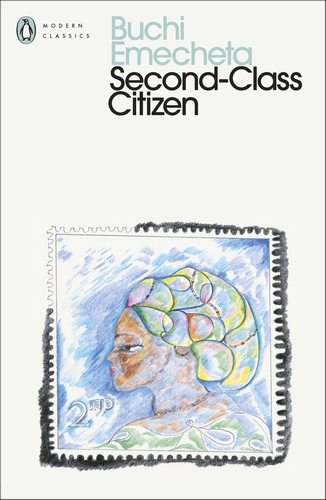
Second-Class Citizen (Buchi Emecheta, 1974)
I was assigned this text as part of a module focusing on Post-Colonial Literatures and was overwhelmed by its gentle beauty. Second-Class Citizen follows Adah, a young Nigerian who follows her husband to England with a determination to succeed. Set in the 1960s, she faces awful living conditions and is treated as a second class citizen, yet her perseverance and modesty is astounding.
The main earner in her family, she works to provide for her children in a neighbourhood that shuns her and a husband who abuses her. The text is often called semi-autobiographical of Emecheta’s own life, and its veins are thick with experience of British racism and injustice. It is a passionate, yet gentle, investigation into what it means to succeed as a Black woman during the 60s.
Close to Home (Michael Magee, 2023)
Winner of the Rooney Prize for Irish Literature and Nero Book Award for Debut Fiction, Magee’s charming first novel explores the often under-discussed barriers faced by working-class men trying to break out of patterns of stagnancy. Sean comes back to Belfast from university with a degree that can’t get him a job and finds that his brother’s drinking problems have worsened. The novel begins with Sean lashing out and assaulting a stranger at a party, and we follow him as he tries to figure out who he is, and who he has left.
I absolutely loved Close to Home. Magee echoes Sally Rooney in a lot of ways, in his complex semi-tragic characters, but he is also so much more. Every page is full of Sean’s desperation to make something for himself, and his exasperation when it continues to fall through. It is heart wrenching, bitter, and, for all that, incredibly warm as we learn to focus on what little things make us who we are.
James (Percival Everett, 2024)
James is a reimagining of Mark Twain’s Adventures of Huckleberry Finn, what is mostly considered to be THE American novel. Everett retells it from Jim’s, an enslaved man, perspective. As anyone who has read the novel will know, Jim owned by Miss Watson, Huck’s guardian, and runs away after overhearing that he could be sold. He bumps into Huck during his escape, Huck having ran away too, and together they plan to head along the Mississippi River to a place where Jim can buy his and his family’s freedom.
Everett’s retelling adds a layer of sensitivity to a book already controversial in its criticism, with some priding the book as anti-racist and others criticising it for its racist slurs and stereotypes. James turns the focus for the first time towards Jim’s agency and wisdom, adding greater depth to this conversation and reminding us that America’s Great Novel continues to be relevant today.
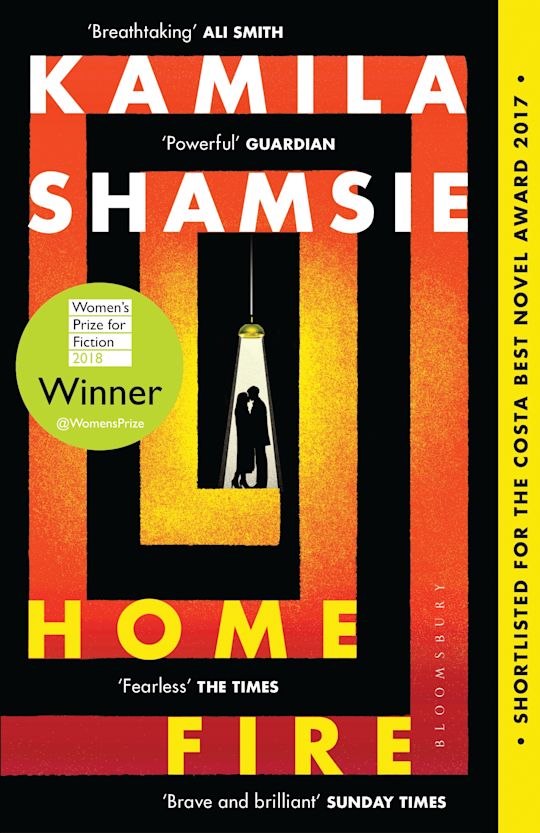
Home Fire (Kamila Shamsie, 2017)
Shamsie’s Home Fire is another reimagining, this time of Sophocles’ Antigone, a Classical Greek tragedy. Repositioning the Greek tale in an international setting, with characters spreading from London, America, Syria, and Pakistan, Home Fire is a complex commentary on what it means to be a citizen in a climate that has only intensified since its publication.
Parvaiz, a teenage boy, joins ISIS after learning that his father was jihadi and this had been kept secret his whole life. He soon realises this decision was a mistake, and his twin sister Aneeka tries to bring him home. When Parvaiz dies, his citizenship is stripped from him and he is unable to return home, though he was born in Britain and had lived there his whole life. Shamsie’s modern tragedy is devastating and vivid; her prose is elegant and unforgettable. Home Fire is a novel that will leave you stunned.
Image: Elliot Burrin



 HEX
HEX 
Leave a comment